
The Three Lists I Make Before Every Ultramarathon
It's been a busy race season for Rhythm Run Coaching athletes, and the best part is that summer is just getting started. With plenty of races still to come, I thought I'd share one of the biggest things that helps me feel confident before an ultramarathon: preparation.
To be clear, this isn't something I coach every athlete to do. A lot of the people I coach are far more organized than I am when it comes to spreadsheets! But whether you use a detailed spreadsheet, a notes app, or simply a checklist on paper, having a plan before race day can make a huge difference.
Step 1: Learn the Course
The first thing I do is study the course and create a spreadsheet with the information I'll need throughout the day. I include:
Distance between aid stations
Estimated time for each segment (using previous years' results as a guide)
Approximate arrival time at each aid station
Aid station cutoff times
Whether I'll have crew access or a drop bag
Once I know what the day will look like, I can start planning everything else around it.
Step 2: Build Your Nutrition Plan
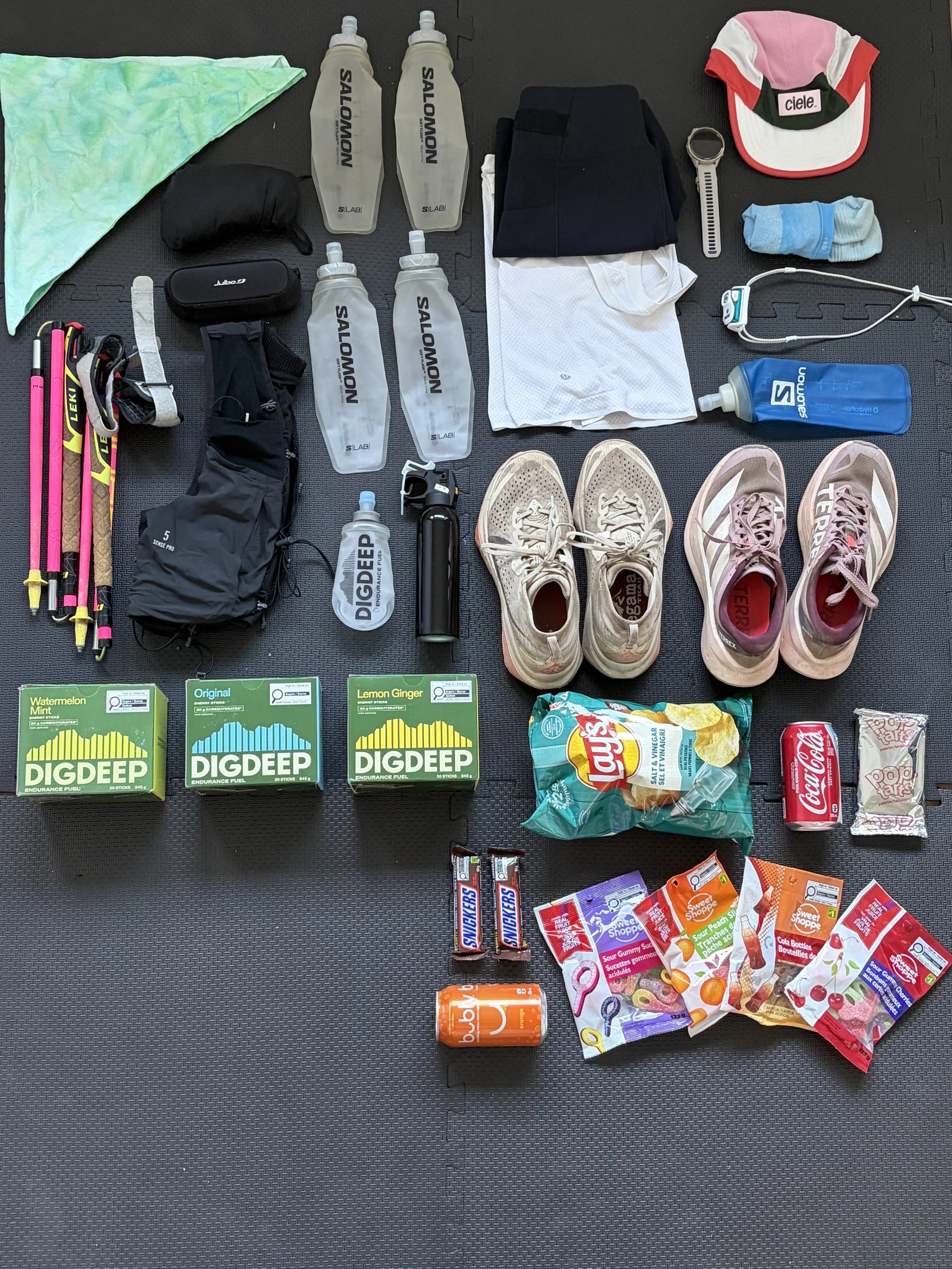
Next, I create my nutrition plan. I start by listing everything I'll be bringing, then assign nutrition to each segment (or each hour) of the race.
For each section, I track:
What I'll eat
Total carbohydrates
Planned fluid intake
Planned sodium intake
I also include my target carbohydrate, fluid, and sodium intake so I can quickly see whether I'm on track. If you're comfortable with spreadsheets, a few simple formulas can total everything automatically and make planning much easier.
Step 3: Make a Gear Plan
Finally, I build a master gear list and decide exactly where I'll need each item. That way I'm not scrambling at the last minute or forgetting something important.
My list usually includes:
Race kit
Shoes
Running vest or belt
Soft flasks (plus spares)
Mandatory race gear
Poles
Spare shoes and socks
Extra clothing for changing weather or cooler nighttime temperatures
Baby wipes, toothpaste, mouthwash, or anything else that helps you feel refreshed
Ice bandana
Sunglasses
Hat
Sunscreen
Headlamp
Bear spray (if applicable)
Every race is different, so your list will change depending on the course, terrain, weather, and race duration.
Preparing for an ultramarathon isn't just about training your body—it's about reducing as many unknowns as possible before you step onto the start line. The more decisions you make ahead of time, the more energy you can spend running when race day arrives.
I always feel calmer and more confident knowing I've thought through every detail beforehand. Hopefully these ideas help you prepare for your next big adventure.